



Date: Dec 20, 2025 Read: 2611
Share:



Foreword
Recently, SSD Fans, a well-known domestic industry technology community, conducted an in-depth evaluation for the Union Memory consumer SSD AM541. According to a series of test results, AM541 demonstrated excellent results in performance, stress, and reliability tests, fully showcasing its strong capabilities as a high-end storage product.
SSD Fans is one of the most influential SSD industry technology communities in China. Its core team consists of senior technical experts from the SSD field, possessing profound experience and technical expertise in firmware development, driver development, hardware logic development, SSD test, etc. Together, they have also built the most comprehensive domestic SSD social network.
The following content is excerpted from the official release of SSD Fans.
As a well-known manufacturer in the storage industry, Union Memory is familiar to many readers, with its product series covering consumer SSDs, enterprise SSDs, data center SSDs, and embedded storage. The product evaluated this time is the Union Memory consumer PCIe 4.0 SSD AM541 with a test capacity of 1 TB.
AM541 is equipped with a four-channel NAND interface, with front-end bandwidth approaching full PCIe Gen4 speed. It is also built with a high-capacity SRAM and an IO acceleration module, enabling industry-leading performance. It can easily handle multiple application scenarios, and provide users with an excellent storage experience.
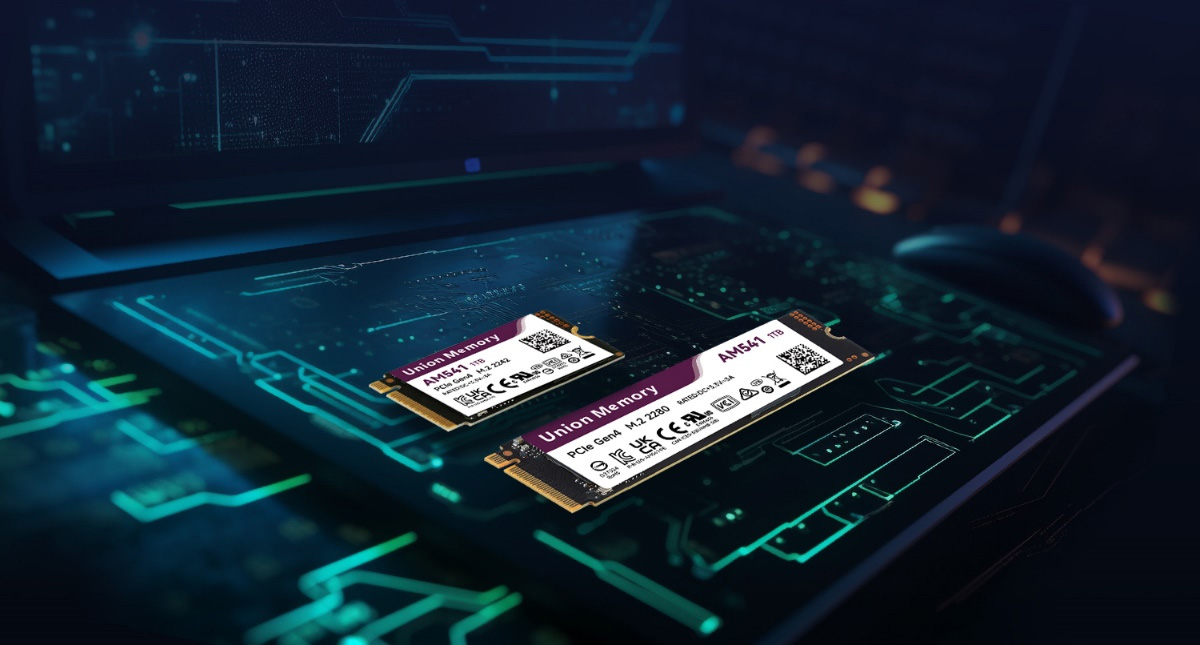
In terms of read/write speeds, AM541 1 TB SSD delivers a sequential read speed of up to 7,000 MB/s and a sequential write speed of up to 5,600 MB/s, reaching an industry-leading level. Such read/write performance can fully meet consumer storage performance requirements.
The official product specifications of AM541 are provided as follows:
|
Model |
AM541 |
|||||
|
Capacity |
256 GB |
512 GB |
1 TB |
256 GB |
512 GB |
1 TB |
|
Sequential read |
6,800 MB/s |
7,000 MB/s |
7,000 MB/s |
6,800 MB/s |
7,000 MB/s |
7,000 MB/s |
|
Sequential write |
3,500 MB/s |
5,600 MB/s |
5,600 MB/s |
3,500 MB/s |
5,600 MB/s |
5,600 MB/s |
|
Random read IOPS (4KB) |
500K |
750K |
800K |
500K |
750K |
800K |
|
Random write IOPS (4KB) |
800K |
800K |
800K |
800K |
800K |
800K |
|
Dimension |
Length 42±0.15 mm, width 22±0.15 mm, height 2.38 mm (max.) |
Length 80±0.15 mm, width 22±0.15 mm, height 2.38 mm (max.) |
||||
|
Weight |
Max. 3.8g |
Max. 6.2g |
||||
|
Power consumption |
L1.2 mode: <5 mW, idle: <50 mW, operating: <100 mW |
|||||
|
Bus interface |
PCIeGen4 ◊4 |
|||||
|
NVMe standard |
NVMe 1.4 |
|||||
|
Temperature |
Operating: 0°C ~ +70°C; non-operating: -40°C ~ +85°C |
|||||
|
Humidity |
5% to 95%, non-condensing |
|||||
|
Mean time between failures (MTBF) |
2,000,000 hours |
|||||
|
Shock |
Operating: Half-sine, 1,000G@1 ms, 6 directions, NVMe 1.4 command set; Non-operating: Half-sine, 1,500G@0.5 ms, 6 faces |
|||||
|
Vibration |
Operating: Random vibration, 5 Grms, 10~2,000 Hz, 3 axes; non-operating: Random vibration, 7 Grms, 2~500 Hz, 3 axes |
|||||
|
Power supply Voltage |
3.3V±5% |
|||||
|
Ripple/noise |
≤ 100 mV |
|||||
Dimension: It is designed with M.2 2280 and 2242 form factors. The compact size allows convenient installation in the devices (such as desktop motherboards and laptops) supporting the M.2 interface, meeting diverse hardware upgrade and installation requirements.
Front design: The overall style is simple and elegant, with a refined label sticker covered on the front. The sticker features a delicate texture, presenting a premium visual appearance with a strong sense of technology. The upper-left corner of the sticker displays the Union Memory logo, the SSD model “AM541” and capacity, enhancing brand and product recognition.
Rear design: No NAND is placed on the rear side. The entire area is copper-coated, which helps improve heat dissipation under extreme performance.
Main controller chip: Equipped with the latest PCIe 4.0 SSD main controller, it is capable of efficient data management and transmission, fully leveraging the bandwidth advantage of the PCIe 4.0 interface, and achieving high-speed data read/write.
NAND Flash particles: It is built on highly recognized 3D NAND architecture, using the latest flash particles with an interface rate of 2,400 MT/s. With 4 channels, the interface speed between the main controller and NAND flash exceeds that of the front-end PCIe 4.0 interface. The manufacturing process adopts direct wafer-to-wafer bonding, significantly increasing the number of vertical channels, and achieving higher storage capacity, and it also integrates a range of cutting-edge technologies to further enhance speed, performance, and energy efficiency. With these features, AM541 delivers extreme PCIe Gen4 performance.
The test tools adopt the eBird SSD professional test suite developed by PHXFLYS TECH. eBird provides a comprehensive test solution covering NVMe protocol to system application level, including performance, power consumption, stability, reliability, and simulated application tests. It supports independent multi-port testing and is compatible with Windows, Linux, and domestic operating systems. It can simulate real application environments, power-loss scenarios, and drive state combinations, supporting drive writing and data verification to ensure accuracy and completeness of tests.
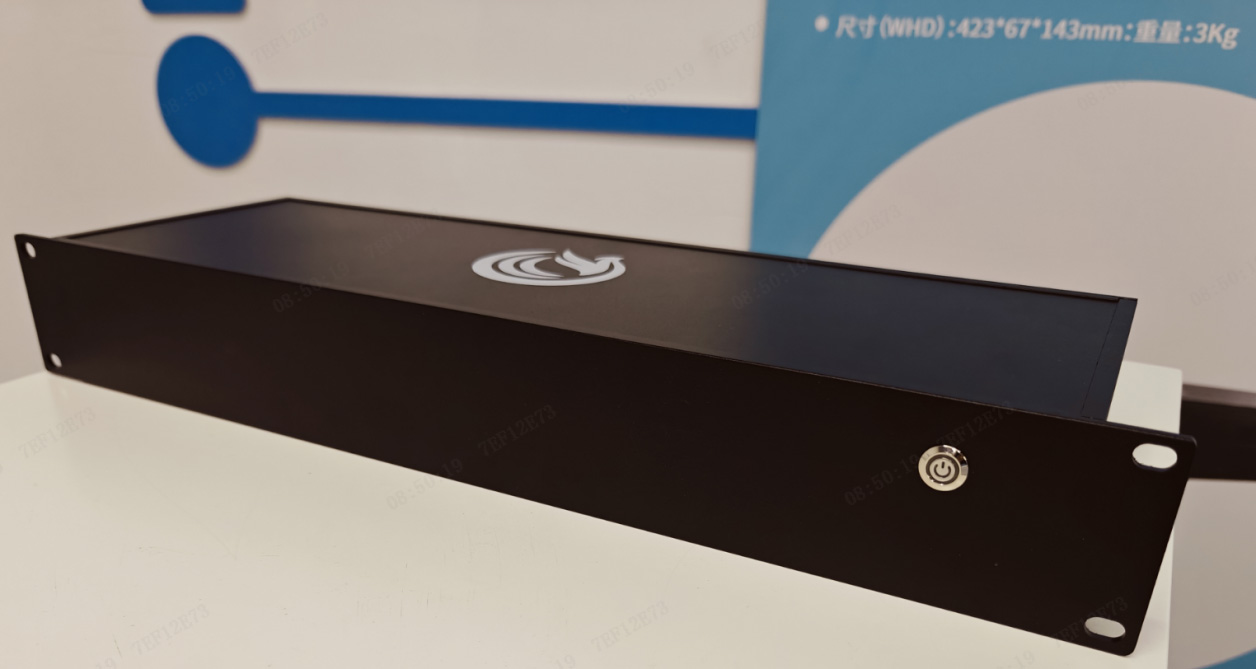
As the flagship PCIe 4.0 SSD under Union Memory, AM541 stands out in the storage field with its excellent technical architecture. It adopts the cutting-edge 3D NAND architecture and the latest NAND flash particles to deeply explore and release the potential of flash memories through advanced technical means.
In terms of design, AM541 features a DRAM-less design that delivers outstanding power efficiency. Combined with an intelligent SLC caching mechanism, it builds a high-speed channel for data transmission, offering a user experience on par with DRAM-based SSDs.
An excellent design can significantly improve SSD read and write speeds, enabling data to flow swiftly between storage and access, and greatly enhancing data interaction efficiency. Regardless of handling heavy computational workloads or complex multitasking scenarios, AM541 delivers fast and precise responses with ease, providing a smooth user experience that inspires confidence and eliminates concerns.
Crystal Disk Mark (CDM), a lightweight but powerful benchmark tool for measuring HDD and SSD performance, has long been favored by users. With its streamlined and efficient operations, it enables users to measure disk read and write speeds quickly and accurately. Regardless of being used for system optimization, careful hardware selection, or troubleshooting, it proves to be a valuable tool. Widely recognized in the industry, it is often referred to simply as CDM and stands as a trusted assistant for storage performance evaluation.
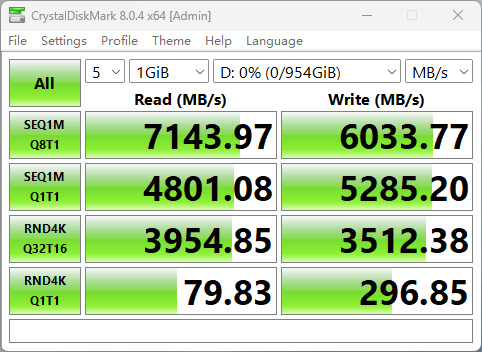
Under the rigorous testing of CDM, AM541 1 TB SSD showed an outstanding performance. Its sequential read speed reached 7,143 MB/s, surpassing the specified rate of 7,000 MB/s, while the sequential write speed reached 6,037 MB/s, also exceeding the specified rate of 5,600 MB/s. The random read/write IOPS reached 988k (3,954 MB/s) and 878k (3,512 MB/s) respectively, significantly surpassing the claimed specification of 800k IOPS. The CDM test results clearly demonstrate this product’s strong performance and sincere commitment to delivering robust parameters to consumer users.
|
|
|
In the low queue test (Q1T1), the Intel-based platform achieved read and write speeds of 88.84 MB/s and 483.75 MB/s, demonstrating outstanding performance and capability among comparable DRAM-less Gen4 SSDs. The Q1T1 index is particularly meaningful for everyday consumer experience, for most of the usage scenarios of ordinary consumers are such low queue applications.
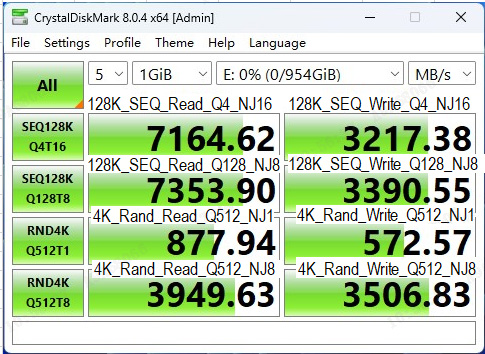
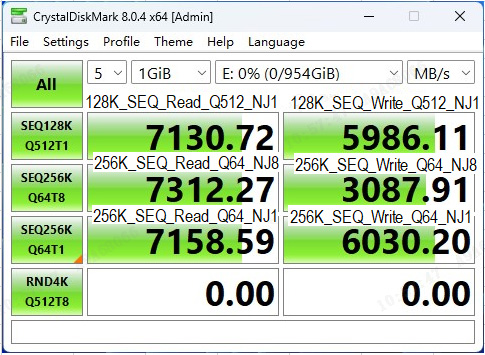
The testers have tested the default configurations of CDM and some custom CDM configuration scenarios. The configuration list is as follows:
|
CDM Test Configurations |
|
128K_SEQ_Write_Q4_NJ16 |
|
128K_SEQ_Read_Q4_NJ16 |
|
128K_SEQ_Write_Q128_NJ8 |
|
128K_SEQ_Read_Q128_NJ8 |
|
128K_SEQ_Write_Q128_NJ1 |
|
128K_SEQ_Read_Q128_NJ1 |
|
128K_SEQ_Write_Q512_NJ8 |
|
128K_SEQ_Read_Q512_NJ8 |
|
128K_SEQ_Write_Q512_NJ1 |
|
128K_SEQ_Read_Q512_NJ1 |
|
256K_SEQ_Write_Q64_NJ8 |
|
256K_SEQ_Read_Q64_NJ8 |
|
256K_SEQ_Write_Q64_NJ1 |
|
256K_SEQ_Read_Q64_NJ1 |
|
4K_Rand_Write_Q512_NJ1 |
|
4K_Rand_Read_Q512_NJ1 |
|
4K_Rand_Write_Q512_NJ8 |
|
4K_Rand_Read_Q512_NJ8 |
AM541b was tested using the above CDM configurations. The test results show that under these configurations, AM541 demonstrated excellent overall performance. These configurations effectively simulate a variety of real-world read/write situations users may encounter when using SSDs. The positive results further indicate that AM541 is fully capable of offering a good use experience. Test results are shown as follows:
 |
 |
 |
|
AM541 is compared with a leading international competitor’s PCIe Gen4 SSD. The results are as follows:
图5
|
|
|
It can be seen from the results that AM541 outperforms competing products in terms of sequential and random read/write performance. The advantage is particularly striking in low queue random read/write and peak sequential read/write, maintaining an overall leading level. This undoubtedly reflects the strong overall capability of AM541.
If a product’s performance advantage cannot withstand prolonged stress, this advantage will not last. Maintaining excellence over the long term is the true goal a product should pursue.
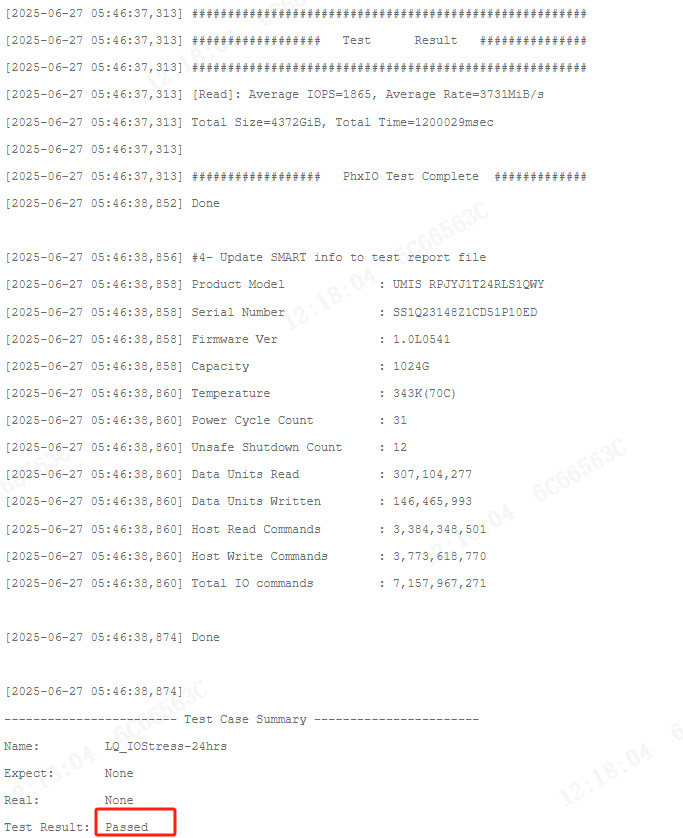
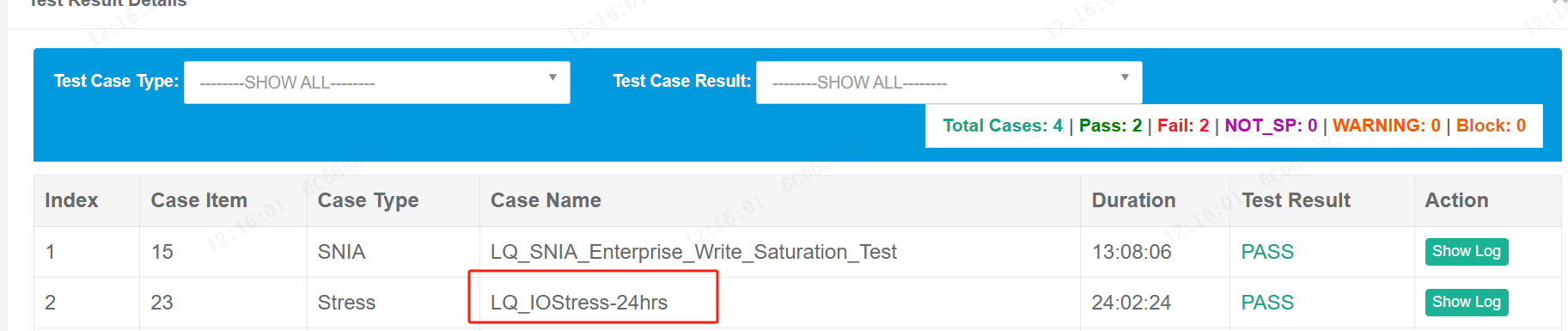
To evaluate AM541 performance under various stress conditions, we conducted rigorous 24h stress tests in accordance with the JEDEC 219 standard, with all test results successfully passing.
Storage Networking Industry Association (SNIA) is a non-profit organization responsible for establishing international storage standards and regulations. SNIA promotes technologies related to data storage, transmission, infrastructure optimization, acceleration, formatting, and protection. The diagram below illustrates SNIA’s research on data formats, transmission, protection, and its future development directions.

SNIA provides standard performance test methods for SSDs. eBird offers a comprehensive test suite that fully covers the SNIA-defined specifications. Using the SNIA suite from eBird, we have conducted SNIA tests on AM541, and the results are summarized as follows:

The SNIA IOPS test is used to evaluate the random read and write performance of SSDs under various combinations of read/write mix ratios and block sizes. The overall test information is as follows:
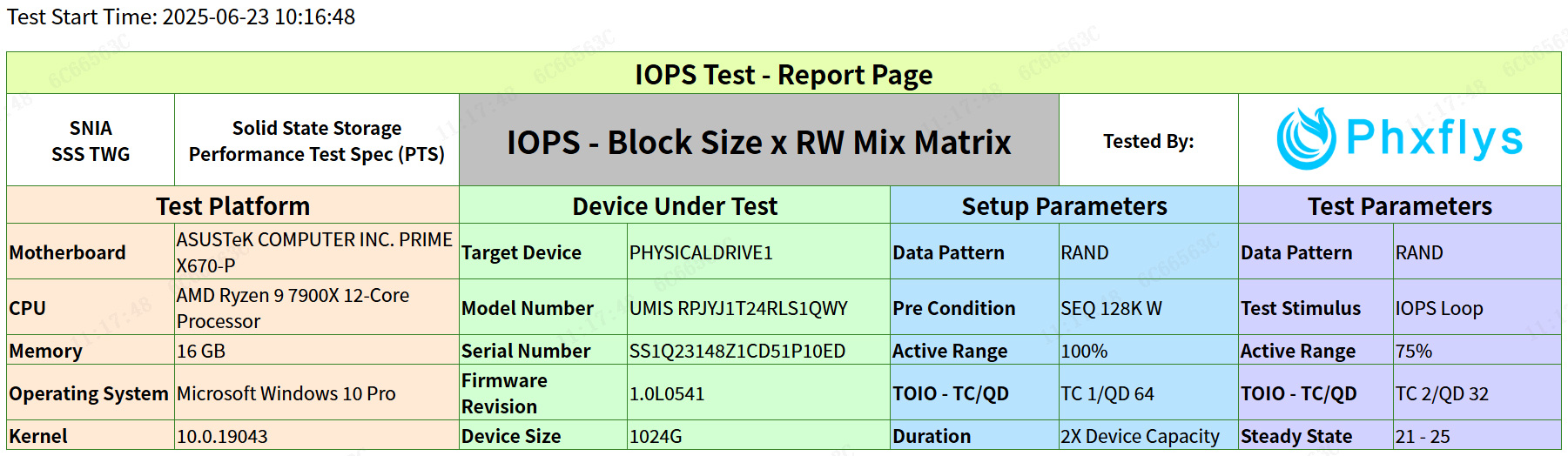
Test must be performed under steady state conditions as defined by the SNIA PTS (Performance Test Specification). The steady state is achieved by performing 128K sequential writes across the entire drive twice to fill it completely, and followed by IOPS test using the specified data pattern. The filled data cannot be all-zero or all-one patterns. Instead, random data (Data Pattern = RAND) should be filled to avoid the result distortion caused by some SSDs with all-zero or all-one detection features. Note that random data write does not refer to random write (which involve random LBA addresses), but rather to the randomness of data content within each LBA.
Random data write ≠ Random write
IOPS test typically covers 7 read/write ratios (from 100% read to 100% write) and 8 block sizes (from 0.5 KB to 1024 KB).
All tests are conducted for 6 cycles to verify result consistency and stability. The final results are as follows:
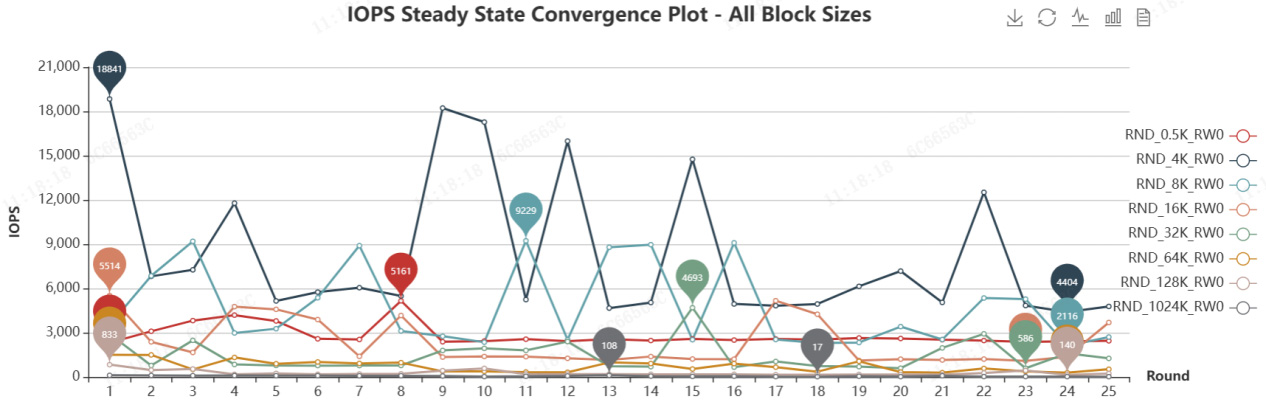
The results are summarized in the following table:
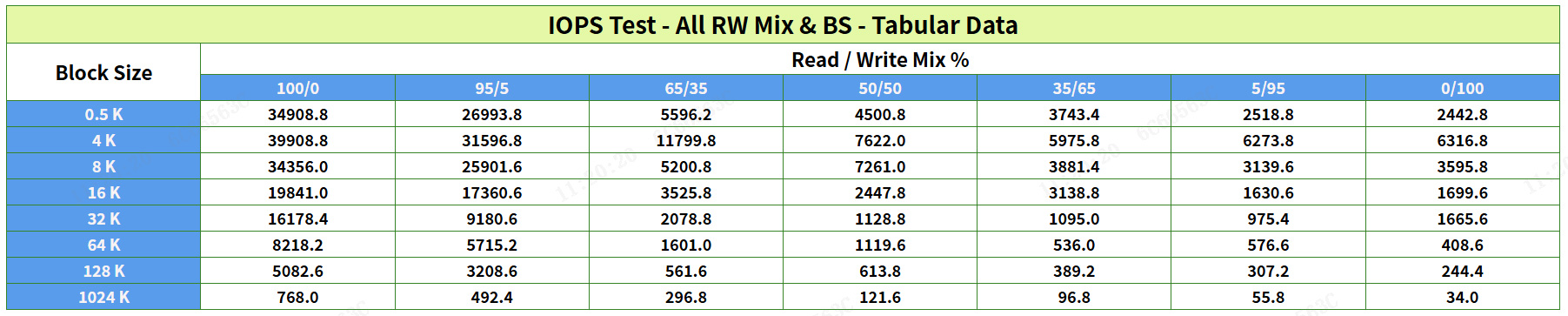
Under random mixed read/write test scenarios with varying block sizes and read/write ratios, the IOPS results are summarized in the following table. Horizontally, under the same read/write ratio, the IOPS decreases stably as block size increases. Vertically, under the same block size, the proportional relationship of total IOPS across different read/write ratios aligns well with theoretical expectations. This indicates that AM541 has been meticulously optimized for mixed random read/write performance.

Using eBird’s data analysis tools, the IOPS results of all RW mixes and block sizes are visualized in 3D, clearly showing smooth performance transitions.

Data integrity test is a key step in ensuring the accuracy and reliability of data stored on SSDs. Such test is essential for protecting data and preventing unauthorized access.
SSD data integrity test first focuses on the effectiveness of error detection and correction mechanisms. SSDs are typically equipped with error correction codes (ECC), which detect and automatically repair common data corruption. During the test, ECC implementation is verified to ensure that data is effectively protected from random errors.
The test also includes validation of write and read operations. After data is written to the SSD, the same data is read and compared with the original data to ensure that no modification or corruption occurs during the write process. In addition, endurance test is used to evaluate data stability in the expected service life of the SSD, ensuring that the limited write cycles of NAND flash units do not affect data integrity.
To simulate real-world application scenarios, data integrity test further includes power fault simulation. During the test, sudden power failure is simulated to verify whether the SSD can prevent data loss under abnormal shutdown conditions. Meanwhile, temperature and environmental tests ensure the reliability under different conditions, including extreme temperature and humidity condition.
SSD data integrity test is a comprehensive process that range from error detection and correction to long-term stability. These tests not only help identify and address potential problems that affect data stability and reliability, but they are also crucial for maintaining user trust and protecting critical data. As the importance of data continues to grow, data integrity test has become an indispensable part of SSD quality assurance.
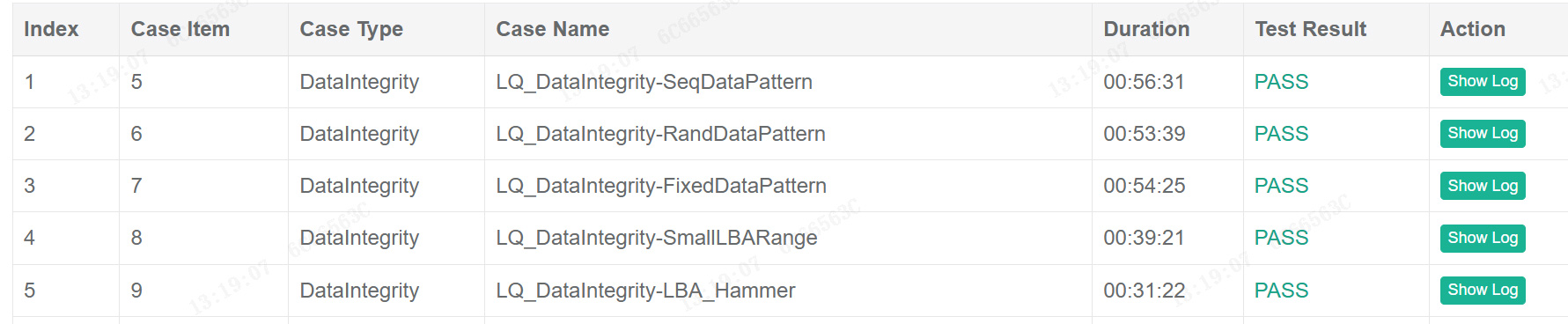
eBird provides a complete set of data integrity test methods, covering sequential, random, mixed read/write and small data scenarios. Test results demonstrate that AM541 performs exceptionally well in data integrity, giving users full confidence in data security. All the test case sets were passed, with results shown below.
The game test is conducted by using the following host configurations:
|
Configuration |
Model |
|
Motherboard |
ASUS PRIME X870-P WIFI |
|
CPU/GPU |
AMD R9 9950X |
|
GPU |
NVIDIA 4080 S |
|
Memory |
32GB |
|
OS |
Windows 11 Pro 23H2 |
For game testing, we selected FF14: SHADOWBRINGERS and Black Myth: Wukong. These games enable direct measurement of scenario loading time, allowing precise evaluation of the SSD’s game performance. For both games, the tests were conducted at a resolution of 1,920×1,080 with graphics set as the highest quality (MAXIMUM), and the parameter measured was total loading time.
The loading time for FF14: SHADOWBRINGERS was only 7.445s, which is loaded instantly. This significantly enhances use experience for gamers, and this data stands well among many commercially available Gen4 products in the market.

Next, we also tested the highly anticipated Black Myth: Wukong. Game startup time and in-game frame rates were recorded with a stopwatch. As Black Myth: Wukong does not include a benchmark, the tester used a stopwatch to measure the time from double-clicking the game icon to entering the game, which took a total of 34s. This is over 40% faster than PCIe 3.0, significantly improving the game experience. Its performance is also comparable to a Gen4 product equipped with DDR.

After the comprehensive performance test, the outstanding performance of AM541 reflects Union Memory’s long-standing commitment to keeping improvement in SSD product development. Testers conducted in-depth evaluation on AM541 under CDM, SNIA, Stress, and game scenarios, focusing on key indexes such as IOPS (input/output operations per second). The results demonstrate that AM541 performed exceptionally well in all tests, fully showcasing its capabilities as a high-end storage product.
Whether under rigorous performance stability test in different storage conditions or in detailed evaluations based on SNIA standards, AM541 consistently achieved outstanding results. Its powerful performance and reliable quality enable it to easily handle demanding applications such as large 3A games and professional content creation. AM541 undoubtedly injects new vitality into the current Gen4 SSD market, providing users with diverse options for their digital lives.

Address: 19th Floor, Block B, Ramaxel Houhai Center, Nanshan District, Shenzhen
Tel: +86 755-2681 3300
E-mail: support@unionmem.com
 Test
results on the AMD platform
Test
results on the AMD platform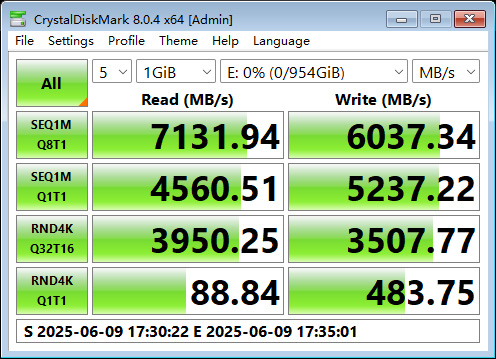 Test
results on the Intel platform
Test
results on the Intel platform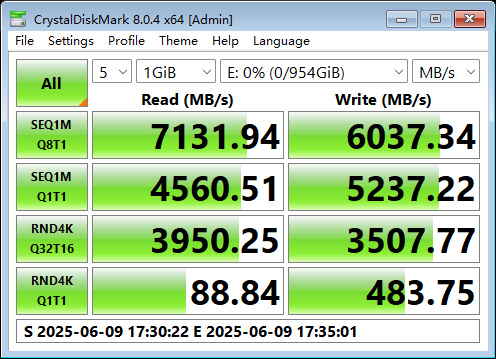 AM541 test result
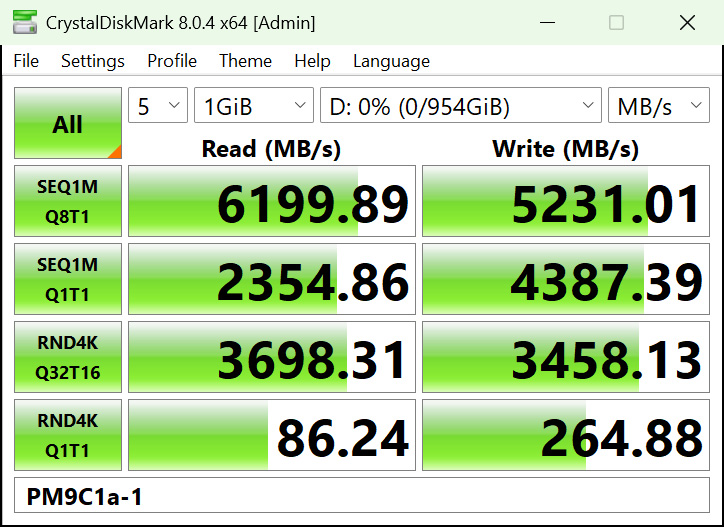 Competitor product result